
Ladder Safety in Construction: The Basics
Falls from ladders remain one of the most common causes of injury in construction and at home. According to the CDC, ladder-related incidents account for nearly 20% of workplace fall injuries. Understanding and following proper ladder safety practices can significantly reduce risk and prevent serious accidents.
Whether you’re on a jobsite or working at home, using the right ladder (and using it correctly) is essential to maintaining a safe working environment.
Ladder Inspection: The First Step to Safety
Before using any ladder, always perform a thorough inspection. A damaged or defective ladder should never be used.
Inspect for the following:
- Broken or missing rungs, rails, or components
- Worn or damaged ropes, pulleys, and locks (extension ladders)
- Non-slip feet and stable footing
- Cracks, corrosion, or structural damage
- Legible manufacturer labels and load ratings (OSHA requirement)
If any defects are found, tag the ladder as unsafe and remove it from service immediately.
Choosing the Right Ladder
Proper ladder safety begins with selecting the correct ladder for the job.
- Type: Choose the appropriate ladder (step ladder, extension ladder, etc.)
- Height: Extension ladders must extend at least 3 feet above the landing surface
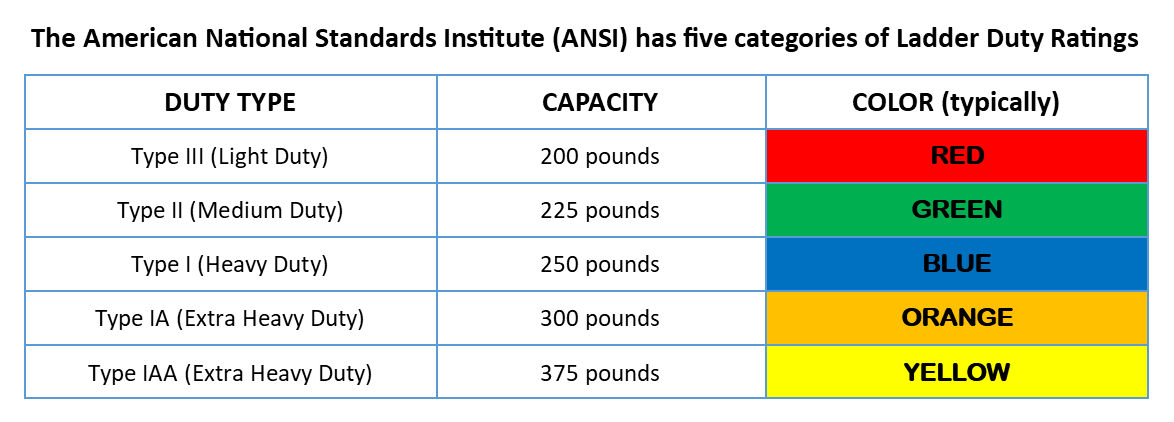
- Duty Rating: Always verify the ladder’s load capacity
- Material: Use fiberglass ladders when working near electricity
Using the wrong ladder increases the risk of falls, injuries, and OSHA violations.
Safe Ladder Setup & Use
Following proper setup and usage guidelines is critical for jobsite safety.
Key ladder safety rules:
- Place ladders on stable, level ground
- Never use objects to increase ladder height
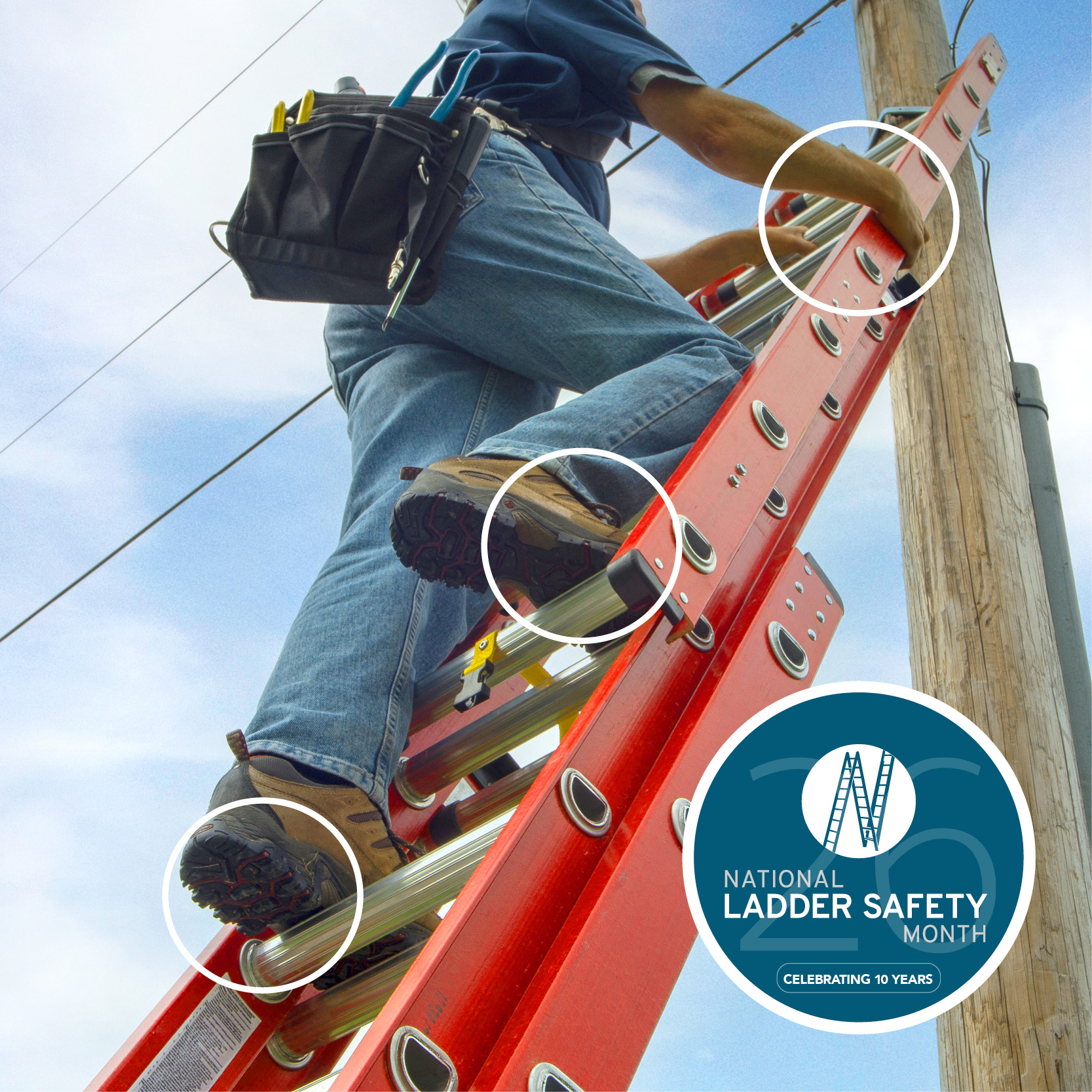
- Always face the ladder when climbing
- Maintain three points of contact at all times
- Keep your body centered between the rails (belt buckle rule)
- Never carry tools while climbing, use a tool belt or rope
For extension ladders:
- Follow the 4:1 rule (1 foot out for every 4 feet up)
- Ensure the ladder is set at a 75-degree angle
- Secure both the top and base of the ladder

Ladder Duty Ratings & Weight Limits
Understanding ladder load capacity is essential for safe use.
To determine total weight on a ladder, include:
- Your body weight
- Clothing and PPE
- Tools and materials
Always follow the manufacturer’s label. If the label is missing or unreadable, do not use the ladder.
Common Ladder Safety Hazards
Even when used correctly, environmental conditions can create risks.
Watch for:
- Wet or slippery surfaces from rain, snow, or mud
- Strong winds that can shift or tip ladders
- Electrical hazards, always maintain safe clearance
- High-traffic areas where ladders can be struck
Avoid using ladders in unsafe conditions, and always reassess the environment before setup.
Proper Ladder Storage & Maintenance
Long-term exposure to weather can weaken ladders and create hazards.
- Store ladders in dry, protected areas
- Inspect regularly for corrosion, UV damage, or wear
- Replace damaged or illegible safety labels
- Remove waterlogged or deteriorated ladders from service
Routine maintenance is a key part of any construction safety program.

OSHA Ladder Safety Guidelines
Final Thoughts: Work Safe, Stay Safe
Ladders are one of the most commonly used (and misused) tools in construction. By following proper ladder safety practices, performing regular inspections, and using the right equipment, most ladder-related accidents can be prevented.
At Larson-Danielson, safety is a core value. Taking the time to use ladders correctly helps protect not only you, but your entire team.
Take care of your equipment and it will take care of you. Work safe. Stay safe.